
Founder Stories: Curiosity Beats Confidence — From Academia to Closing Six-Figure Deals
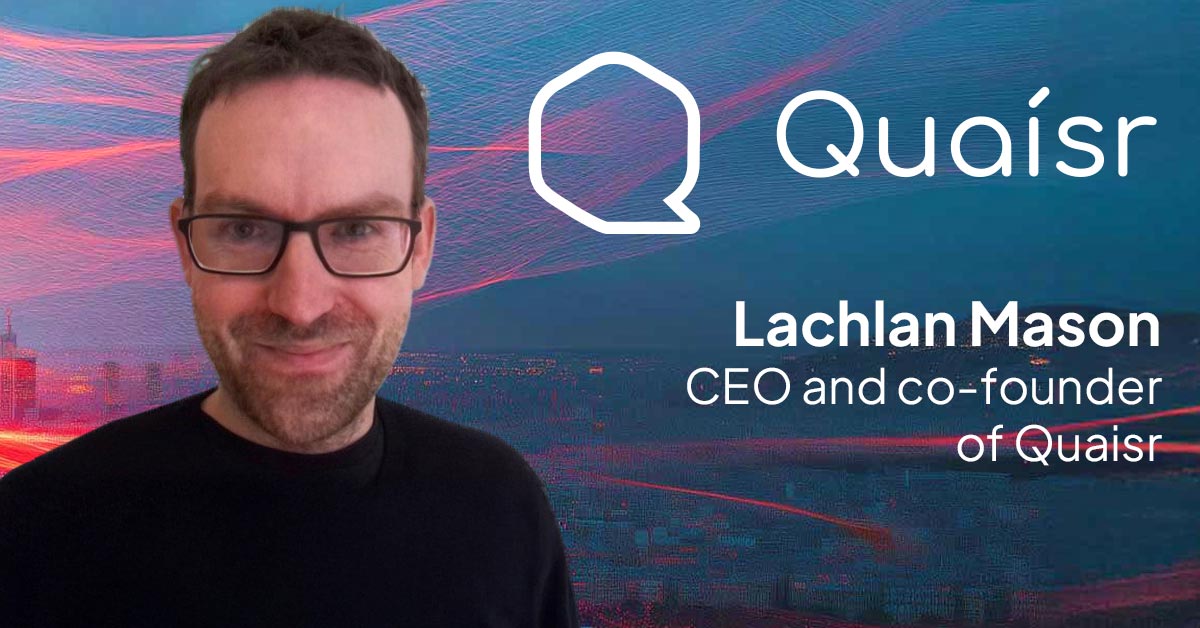
Lachlan Mason, CEO and co-founder of Quaisr, helps companies become AI-first by connecting their trusted R&D tools through digital simulations. His journey from chemical engineering researcher to CEO selling six-figure enterprise deals is a masterclass in how curiosity, persistence, and humility can turn academic precision into commercial success.
From Academia to Entrepreneurship
I trained as a researcher in chemical engineering across institutes in Australia and the UK. My co-founders and early team members all came from similar academic paths — about 80% of our team holds PhDs.
That background gave us deep technical credibility with our customers, but it also came with habits we had to unlearn. In academia, you succeed by exploring ideas in depth and presenting knowledge, not by closing deals. Early on, we had to learn how to translate our technical expertise into commercial value.
Before Quaisr, my experience with “selling” was limited to presenting research at conferences or applying for grants. Recruiting early employees and fundraising were my first real lessons in persuasion and storytelling — unknowingly, my first steps toward founder-led sales.
The Early Days of Founder-Led Sales
We knew that founder-led sales could work. We’d seen examples of other founders driving hundreds of thousands in early revenue before hiring a sales team. That gave us the confidence to take ownership of selling ourselves.
Looking back, we probably underestimated how hard that would be — but learning it firsthand shaped our approach for everything that came after.
We started by pursuing opportunities in our immediate network. One of our first projects was with a large multinational FMCG company we had previously collaborated with through an academic grant. Given our backgrounds, we felt comfortable pitching to their scientists and engineers.
But we missed something crucial: the commercial decision-makers weren’t in the lab. We had no relationships with their management chain, and when the deal collapsed, it hurt badly. We had built our fundraising story around it, and suddenly it was gone.
That failure was a turning point. It pushed us to rethink how we found opportunities and how we engaged potential customers.
Breaking Out of the Academic Bubble
For months, we tried everything — email campaigns, accelerators, industry events — but nothing stuck. Then we found an unlock that changed everything.
We began using LinkedIn to reach people in large multinational companies who shared something in common with us: our university backgrounds. We’d send connection requests and follow-up messages, not pitching our product, but starting conversations.
These people often didn’t have a problem we could solve directly, but they knew someone who did. They’d say, “You should talk to this person,” and those introductions multiplied quickly.
At the same time, we manually messaged senior leaders and “wildcard” contacts in adjacent industries. After testing dozens of approaches, we automated what worked and began reaching thousands of potential leads.
It wasn’t about volume for the sake of volume — it was about curiosity. We wanted to learn where our solution could create real impact. Over time, we built a repeatable process for finding opportunities, chasing them, and growing relationships inside our customer base.
And while it’s called founder-led sales, at Quaisr, everyone sells. From the earliest days, all founders and team members contributed to outreach, relationship-building, and delivery. Selling became a team sport.
Learning Through Loss
Every lost deal in the early days felt personal — because we only had a handful of opportunities. But as the number of conversations grew, so did our resilience. We started to see each rejection as data, not defeat.
We learned that technical excellence alone wasn’t enough. We’d lost an RFP despite building a great solution because the decision had already been made before we entered the process. We were there just to make up the numbers.
That experience taught us a critical lesson: commercial conversations must stay one step ahead of technical ones.
We began mapping the buying chain early — identifying the budget holders, influencers, and blockers inside each company. We made sure to talk to senior leadership before investing too deeply in the technical details. If we didn’t, we risked having to start over when someone new entered the process.
Over time, we realized that this was like learning to spot the “exam questions” in advance. Instead of showing up with a generic answer, we started helping our prospects write the exam. When an RFP came out, the questions often reflected the language and insights we’d shared in earlier discussions — and that gave us a major advantage.
When senior stakeholders were engaged early, even adversarial technical questions became easier to handle. We could elevate the conversation to business outcomes — reducing regulatory filing time for a pharmaceutical client, or cutting operational risk for a mining company — instead of debating minor technical features.
Rethinking Deal Structure
Like many startups, we initially aimed high: large contracts, multi-year deals, and high pricing. It backfired. Most multinationals are cautious about large commitments with early-stage companies.
We adjusted our strategy. Instead of pushing for big initial deals, we focused on small entry points with clear expansion potential.
That shift paid off. In one case, a customer rejected a large package but agreed to a smaller pilot. Once inside, we demonstrated value quickly, gathered unique insights, and built internal champions. Those relationships grew into three projects — and eventually a six-figure deal, larger than the original proposal.
It was a powerful lesson: trust is built incrementally. Small wins compound.
Who Quaisr Sells To
Today, we sell to large multinationals in pharmaceuticals, mining, and defense manufacturing — sectors that are science-led, data-heavy, and eager to operate more like technology companies.
We’ve landed several of the global top 10 pharma companies and two of the largest mining companies as customers. Getting there took persistence, experimentation, and strategic networking.
Early on, introductions through accelerators and government programs like the UK Digital Catapult helped us open doors. We also used platforms like scientist.com to bypass complex procurement processes when possible. These routes weren’t perfect, but they gave us traction.
The Complexity of Enterprise Sales
Working with large enterprises has brought new challenges. Managing a six-figure deal often means coordinating across multiple teams, departments, and time zones.
For founders, stakeholder management can easily become 80–90% of the job. You’re not just selling a product — you’re managing relationships, aligning priorities, and navigating corporate politics.
We’ve learned that relationships need to exist at multiple levels of the organization. People get promoted or leave; projects shift. If you’re relying on a single champion, you’re vulnerable.
Our biggest deals now involve VP- and C-suite-level engagement. At first, we were intimidated asking for that level of access, but we’ve found that senior leaders are often the most open and helpful.
Travel has also been essential. Visiting customer sites across continents allows us to meet multiple stakeholders in person, build trust faster, and uncover insights that simply don’t emerge over Zoom.
Those in-person visits have often led directly to expanded deals or accelerated decisions.
Lessons for Founders
- Curiosity beats confidence. Don’t assume you know how the sales process works — learn by asking, observing, and adapting.
- Talk to leadership early. Technical success won’t matter if the commercial conversation lags behind.
- Start small, expand big. A modest first deal can open the door to long-term, high-value partnerships.
- Build multiple champions. Relationships across levels protect your deal when internal changes happen.
- Unlearn old habits. In academia, knowledge wins. In business, understanding people does.
Final Thought
If there’s one thing I’ve learned, it’s that curiosity beats confidence every time. The best deals don’t start with certainty; they start with questions.
By replacing academic detachment with real curiosity about how our customers think and buy, we’ve been able to bridge the gap between research and revenue — and turn those early, tentative conversations into trusted, long-term partnerships.
This interview is adapted from the book Founder-Led Sales Explained by Rav Dhaliwal and Ben Wright.